


12/01/2026
If you have just arrived in Japan and often hear people talking about the “foreigner card,” you may wonder what the Japanese Residence Card is, what it is used for, and whether it is mandatory to carry it at all times. In fact, the Japanese Residence Card is one of the most important documents for foreigners legally residing in Japan.
The article below provides a clear and easy-to-understand explanation, especially for those who are new to life in Japan.

What is the Japanese Residence Card?
The Japanese Residence Card, commonly known in Japanese as 在留カード (Zairyuu Card), is a residence card issued to foreign nationals who are legally living in Japan under an approved residence status.
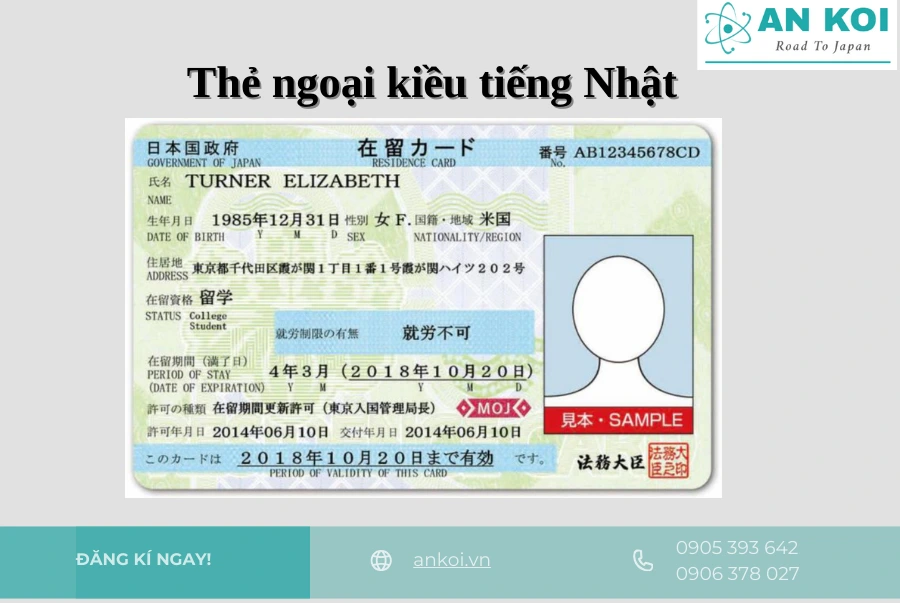
What is the Japanese Residence Card?
This card is issued by the Immigration Services Agency of Japan and serves as an official form of identification for foreigners in Japan. With a Japanese Residence Card, you can prove:
-
Your identity (full name, date of birth, nationality)
-
That you are legally residing in Japan
-
Your current residence status
-
The length of time you are permitted to stay in Japan
Simply put, the Japanese Residence Card is the most important and mandatory document you must have when living and working in Japan.
What information is shown on the Japanese Residence Card?
One important point when learning about what the Japanese Residence Card is is understanding what information is displayed on the card. The Japanese Residence Card contains the following basic details:
-
Full name
-
Date of birth
-
Gender
-
Nationality/region
-
Residential address in Japan
-
Residence status
-
Period of stay
-
Card expiration date
-
Photograph
-
Card number (ID)
In addition, depending on each individual case, the Japanese Residence Card may also indicate whether the holder is permitted to work in Japan.
For example:
-
International students usually need to apply for a Permission to Engage in Activity Other Than That Permitted (資格外活動許可) if they wish to work part-time.
-
Foreign workers with a work visa are generally allowed to work only within the scope of occupations permitted under their residence status.
Therefore, when living in Japan, it is important to carefully check all the information on your Japanese Residence Card to avoid mistakes and to ensure your legal rights and benefits.
Format of the Japanese Residence Card
Many people who have just arrived in Japan often wonder what the Japanese Residence Card looks like, how many sides it has, and what they should pay attention to when using it. This is a very important question, as the Japanese Residence Card (在留カード) is a mandatory form of identification for foreigners living in Japan.
In general, the Japanese Residence Card has two sides with the following information:
Front side of the Japanese Residence Card
The front side displays the main identification details of the cardholder, including:
-
Photograph
-
Full name
-
Nationality
-
Date of birth
-
Residence status in Japan
-
Period of stay
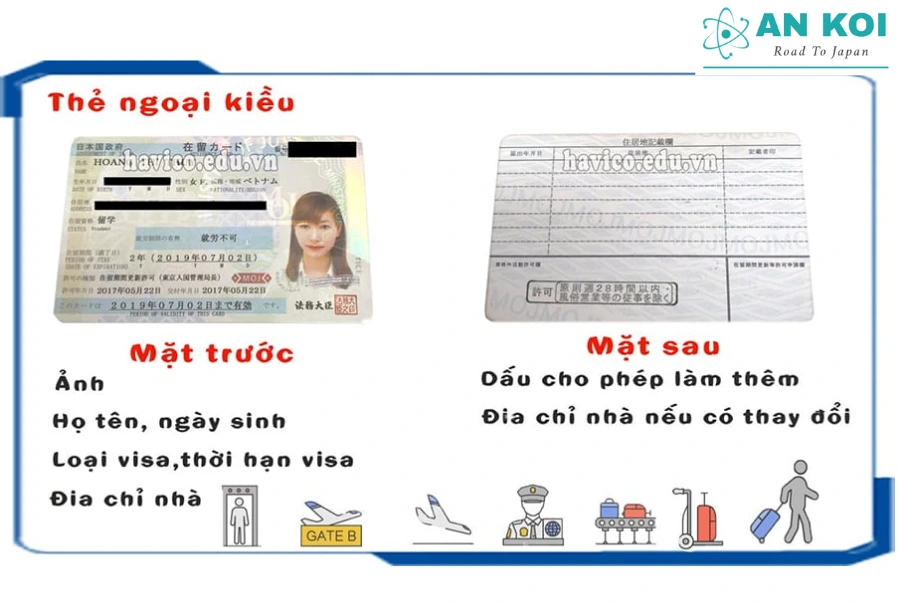
Format of the Japanese Residence Card
Back side of the Japanese Residence Card
The back side contains information related to residence and updates, including:
-
Residential address in Japan (after registration at the city/ward office)
-
Updated or changed information (if any)
Important notes
If you have just entered Japan, the back side of your Japanese Residence Card may not yet show your address. In this case, you must promptly visit your local city hall or ward office (市役所/区役所) to register your address, after which the information will be updated on your card.
Who is eligible to receive a Japanese Residence Card?
Not everyone who comes to Japan is issued a Japanese Residence Card. In fact, the Japanese Residence Card (在留カード) is mainly issued to foreign nationals who stay in Japan long-term under a legal residence status.
Below are the common groups eligible to receive a Japanese Residence Card:
-
International students
-
Technical intern trainees
-
Engineers and technical specialists
-
Specified Skilled Workers (Tokutei Ginou – 特定技能)
-
Spouses of Japanese nationals
-
Foreigners holding other long-term visas (usually valid for three months or longer)
If you are visiting Japan for a short-term stay or tourism, you will not be issued a Japanese Residence Card.
What is the Japanese Residence Card used for?
Many newcomers to Japan think that the Japanese Residence Card is something you just “carry for formality,” but in reality, this card is used in many everyday situations.
1) Proof of legal residence status
When handling administrative procedures in Japan, you will almost always need to present your Japanese Residence Card (在留カード – Zairyuu Card) to prove that you are legally residing in the country.
2) Registering your residential address
After arriving in Japan, you are required to register your address at the city hall or ward office (市役所/区役所). In this process, the Japanese Residence Card is a mandatory document.
3) Opening a bank account

Japanese Residence Card for opening a bank account
When opening a bank account in Japan, bank staff will usually ask you to present:
-
Your Japanese Residence Card (在留カード – Zairyuu Card)
-
Address information
-
A phone number (depending on the bank)
Therefore, if you do not yet have a Japanese Residence Card or if the information on the card has not been updated, you may face difficulties completing the procedure.
4) Buying a SIM card or registering a mobile phone
Japanese Residence Card for mobile phone registration and SIM card purchase
In Japan, purchasing a SIM card or signing up for a mobile phone contract generally requires identity verification. The Japanese Residence Card (在留カード – Zairyuu Card) is the most commonly used document for this purpose.
5) Renting a house and signing contracts
When renting an apartment, you will need to provide proof of residence. The Japanese Residence Card helps verify your residence status, period of stay, and address in Japan.
6) Job applications and employment
For those who work in Japan (engineers, specified skilled workers, technical interns, etc.), the Japanese Residence Card is an essential document for:
-
Signing employment contracts
-
Completing company paperwork
-
Registering for insurance and tax procedures
What should you do with your Japanese Residence Card after arriving in Japan?
After understanding what the Japanese Residence Card is, you need to be aware of the important steps to take immediately after arriving in Japan to avoid mistakes.
1) Receive your Japanese Residence Card
In many cases, you will receive your Japanese Residence Card at the airport upon entry into Japan (depending on your visa type and the airport of arrival).
2) Register your residential address
After securing accommodation, you must visit the city hall or ward office to register your address. This is an extremely important step because:
-
Your address will be printed or recorded on your Japanese Residence Card
-
You will then be able to proceed with other procedures such as opening a bank account or purchasing a SIM card
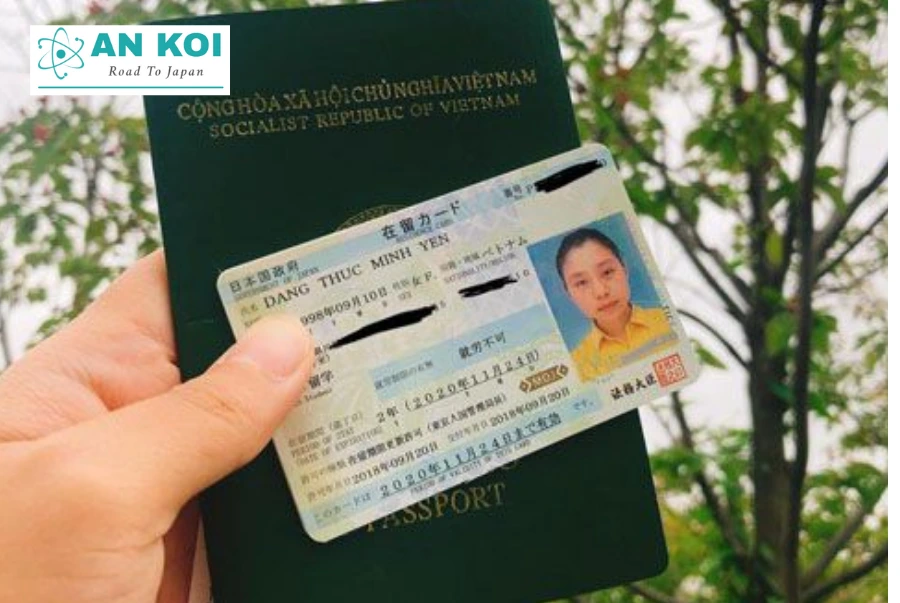
What should you do with your Japanese Residence Card after arriving in Japan?
3) Check the information on your Japanese Residence Card
You should carefully check the following details:
-
Whether your name is correct
-
Your date of birth and nationality
-
Your residence status in Japan
-
Your permitted period of stay
If there is any incorrect information, it should be corrected as soon as possible to avoid future complications.
Common mistakes and important notes when using the Japanese Residence Card
Below are the most common mistakes that newcomers to Japan often make:
-
Forgetting to carry the Japanese Residence Card when going out:In Japan, foreign residents are generally required to carry their Japanese Residence Card (在留カード) at all times. If you are stopped for an identity check and do not have your card, you may face unnecessary trouble.
-
Losing the Japanese Residence Card:If your Japanese Residence Card is lost, you must report it and apply for a replacement as soon as possible, as this card is directly related to your legal residence status in Japan.
-
Failing to update your address after moving:When you change your place of residence, you are required to update your new address at the city hall or ward office. If not updated, the information on your Japanese Residence Card will be incorrect and may affect future administrative procedures.
-
Letting the card expire without renewal:The Japanese Residence Card has a validity period. When it is nearing expiration, you should prepare and submit your renewal application early to avoid falling into an illegal residence status.
Japanese Residence Card & Residence Status Support Services in Japan with Ankoi
For many people who have just arrived in Japan, the biggest challenges are the language barrier and unfamiliar administrative procedures. If you are facing difficulties with procedures related to the Japanese Residence Card (在留カード), Ankoi can support you quickly, clearly, and in full compliance with Japanese regulations from the very beginning.

Japanese Residence Card & Residence Status Support Services in Japan with Ankoi
What Ankoi can support you with:
-
Guidance on residential address registration at city halls or ward offices (市役所/区役所), helping you understand what documents to prepare and how to complete each step correctly.
-
Consultation on residence status and the Japanese Residence Card, including a clear explanation of the information shown on the card, how to check it, and which important points to pay attention to in order to avoid mistakes.
-
Assistance with common issues, such as changing your address after moving, losing your card, reissuing a card, or preparing related documents for further procedures such as opening a bank account, purchasing a SIM card, or registering for insurance.
Whether you are an international student, technical intern trainee, specified skilled worker (Tokutei Ginou), or someone who has just arrived in Japan, receiving proper guidance from the start can save you a significant amount of time, reduce unnecessary trips, and minimize potential problems in the future.
Frequently Asked Questions about the Japanese Residence Card
1) Is the Japanese Residence Card the same as a visa?
No. A visa is a document that allows you to enter Japan, while the Japanese Residence Card (Zairyuu Card) is a residence card used during your stay in Japan.
2) Is it mandatory to carry the Japanese Residence Card at all times?
Generally, foreign residents are required to carry their Japanese Residence Card and present it when requested.
3) What should I do when my Japanese Residence Card is about to expire?
You need to prepare and submit an application to renew your residence status before the card expires to avoid any impact on your studies or employment.
4) Can I reissue my Japanese Residence Card if I lose it?
Yes. However, you must follow the official reissuance procedures and should handle it as soon as possible.
We hope that through this article, you now have a clear understanding of what the Japanese Residence Card is, how it is used in daily life in Japan, and the important points to keep in mind to avoid problems during administrative procedures.
This is an extremely important document, so be sure to regularly check the information on your card, update your address on time, and keep it safe throughout your stay in Japan.
If you are still feeling confused after arriving in Japan or need support with procedures related to your residence status—such as address registration, information changes, renewal, or card reissuance—please contact Ankoi today.
We are ready to provide fast consultation, clear guidance, and proper support to help you save time and complete all procedures smoothly.
Latest Posts


Hashtags
Contact


